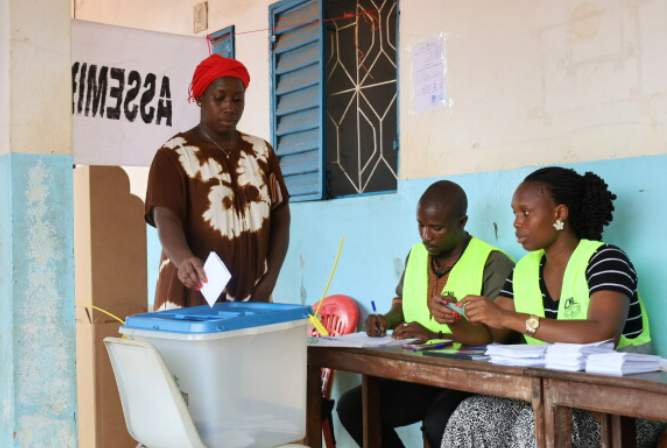
At a time when some countries are amending their constitutions to allow incumbents to remain in power, Benin has taken a different path. President Patrice Talon is stepping down after two terms in office since 2016. Yet, despite his adherence to term limits, the upcoming election appears less competitive. Can a transition process be considered democratic if the conditions for meaningful competition are weakened?
Recent electoral reforms and restrictions on opposition participation have narrowed the political space, effectively limiting meaningful competition.
Political Context
Benin transitioned from decades of military rule to multiparty democracy in 1990. Since then, there have been four democratic transfers of power. However, despite its relative stability, Benin’s political climate has become increasingly restrictive since 2016. According to Freedom House, President Patrice Talon began consolidating power after coming into office in 2016.
The 2019 parliamentary elections were widely criticized as uncompetitive after opposition parties were excluded from the process. Talon’s electoral reforms made it more difficult for opposition parties to participate by increasing the vote threshold for parliamentary representation from 10% to 20% and raising the sponsorship requirement for presidential candidates from 10% to 15% of elected officials, limiting the ability of smaller and opposition parties to gain political representation.
The 2021 presidential election was disputed due to intimidation and the exclusion of key candidates, exemplified by the arrest and imprisonment of Reckya Madougou on terrorism charges.
In December 2025, a coup attempt by a group of soldiers was foiled by the Beninois army with help from the Economic Community of West African States (ECOWAS). The failure of the coup amid citizens’ displeasure with the actions of Talon’s administration shows the continuous support for the democratic process over the use of violence. Tensions remain high as the country approaches the April 2026 elections, with the main opposition party barred from participating under the 2024 electoral amendment. These developments raise serious questions about the election’s credibility, as the vote will be held under uncompetitive conditions.
Electoral Rules
Benin’s presidential election is scheduled for April 12 and operates under a two-round system. Should no candidate receive more than 50% in the initial round, a runoff will determine the winner.
Presidential Criteria and Eligibility
To run for president, candidates must be Beninese, either by birth or by naturalization, for at least ten years. They need to have good character, enjoy full civil and political rights, be between forty and seventy years old, and pass a health and mental check by three doctors appointed by the Constitutional Court. Candidates also need sponsorship from at least 15% of representatives and mayors nationwide.
Source: CDD GHANA